 EN
EN

In modern industrial and commercial power systems, maintaining stable voltage levels across all three phases is not a luxury — it is a fundamental operational requirement. A 3 phase voltage regulator plays a central role in ensuring that electrical equipment receives consistent, clean, and balanced power at all times. Without proper voltage regulation, facilities face a wide range of power quality issues that can lead to equipment damage, production downtime, and increased energy costs. Understanding how this technology works and why it matters is essential for engineers, facility managers, and procurement specialists who depend on reliable electrical infrastructure.
The relationship between a 3 phase voltage regulator and power quality is direct and measurable. When voltage fluctuates, sags, swells, or becomes unbalanced across phases, the downstream effects ripple through every connected device and system. By actively correcting these deviations, a well-designed 3 phase voltage regulator protects sensitive equipment, improves system efficiency, and reduces the burden on transformers and distribution components throughout the network. This article explores the specific mechanisms by which these regulators enhance power quality and why deploying them is a sound engineering and business decision.
Understanding Power Quality and Its Core Challenges
What Power Quality Actually Means in Three-Phase Systems
Power quality in a three-phase electrical system refers to the degree to which voltage and current conform to the ideal sinusoidal waveform at the correct magnitude, frequency, and phase balance. When any of these parameters deviate from their nominal values, power quality degrades. The consequences are not merely theoretical — motors run hotter, control systems malfunction, and energy is wasted as heat rather than converted into useful work.
In three-phase systems specifically, the challenge is compounded because any imbalance between phases adds an additional layer of stress. A 3 phase voltage regulator addresses this by monitoring each phase independently and making corrections in real time. This phase-specific approach is what distinguishes three-phase regulation from simpler single-phase solutions and makes it indispensable in industrial environments.
Common power quality problems include voltage sags caused by large motor startups, swells triggered by sudden load disconnection, long-term steady-state over-voltage or under-voltage from utility supply variations, and phase imbalance arising from uneven load distribution. Each of these conditions has a different root cause, but a 3 phase voltage regulator is engineered to handle them all within a unified framework.
The Hidden Costs of Poor Voltage Regulation
Poor voltage regulation rarely announces itself with a dramatic failure. Instead, it erodes equipment lifespan gradually, increases maintenance frequency, and quietly inflates energy bills. Induction motors, for example, are extremely sensitive to voltage imbalance. Even a 2% voltage imbalance can produce a disproportionately large increase in motor winding temperature, accelerating insulation degradation and shortening service life.
Sensitive electronic loads such as variable frequency drives, programmable logic controllers, and precision instrumentation are equally vulnerable. These devices require tightly regulated input voltage to function correctly and reliably. When the supply voltage drifts outside their acceptable input range, they either shut down to protect themselves or operate in a degraded mode that produces inaccurate outputs and unpredictable behavior.
The financial implications extend beyond equipment repair costs. Production stoppages, quality defects caused by process instability, and the labor costs associated with diagnosing and correcting power-related failures all add up quickly. Investing in a 3 phase voltage regulator is therefore not merely a technical upgrade — it is a cost-management strategy with a measurable return on investment.
Core Mechanisms That Drive Power Quality Improvement
Automatic Voltage Correction Across All Three Phases
The primary mechanism through which a 3 phase voltage regulator improves power quality is automatic voltage correction. The regulator continuously samples the output voltage on each phase and compares the measured value against the set-point. When a deviation is detected, the regulator activates a correction circuit — typically involving an autotransformer tap changer, a servo-motor-driven variac, or a solid-state switching topology — to bring the output back within the specified tolerance band.
This correction process happens continuously and with a response time calibrated to the severity and speed of the voltage event. Fast electronic regulators can respond to transients within milliseconds, making them suitable for protecting highly sensitive loads. Electromechanical designs offer slightly slower response but provide extremely high accuracy for steady-state regulation over long periods. The choice of technology depends on the application requirements, but the underlying goal — maintaining stable output voltage — remains the same across all designs.
By keeping output voltage stable regardless of what happens on the supply side or how the connected load changes, the 3 phase voltage regulator effectively decouples sensitive equipment from the unpredictable variations in the upstream power network. This decoupling is the fundamental source of the power quality improvements that users experience.
Phase Balancing and Its Role in System Stability
Beyond correcting absolute voltage levels, a high-quality 3 phase voltage regulator also addresses phase imbalance — a condition where the voltage magnitude on one or more phases differs significantly from the others. Phase imbalance is particularly common in facilities with large single-phase loads that are distributed unevenly across the three phases, or in utility networks that serve a mix of single-phase and three-phase customers.
When phases are imbalanced, three-phase motors draw unequal currents from each phase, creating negative-sequence current components that produce braking torque and excess heat within the motor windings. This is mechanically destructive and thermally damaging simultaneously. A 3 phase voltage regulator that regulates each phase independently can compensate for this imbalance at the point of delivery, ensuring that every phase presents the same regulated voltage to the load regardless of the asymmetry in the supply.
The ripple effect of effective phase balancing extends throughout the distribution system. Transformer losses are reduced, neutral conductor currents are minimized, and the overall efficiency of the power system improves. These are systemic benefits that compound over time, contributing to both lower operating costs and longer infrastructure service life.
The Integration of 3 Phase Voltage Regulators with Distribution Systems
Compatibility with Transformers and Distribution Architecture
A 3 phase voltage regulator does not operate in isolation — it is always part of a larger power distribution architecture. Understanding how it integrates with other components, particularly distribution transformers, is essential for designing a power quality solution that works effectively end to end. Transformers and regulators serve complementary functions: the transformer steps voltage up or down to the appropriate level for the distribution network, while the regulator maintains that voltage within tight tolerances as load conditions and supply variations change.
In many industrial installations, the 3 phase voltage regulator is placed on the secondary side of the main distribution transformer, close to the load it serves. This positioning allows it to compensate for voltage drops across feeder cables as well as variations in the transformer's secondary output. In larger installations, multiple regulators may be deployed at different points in the distribution hierarchy to provide localized regulation where it is most needed.
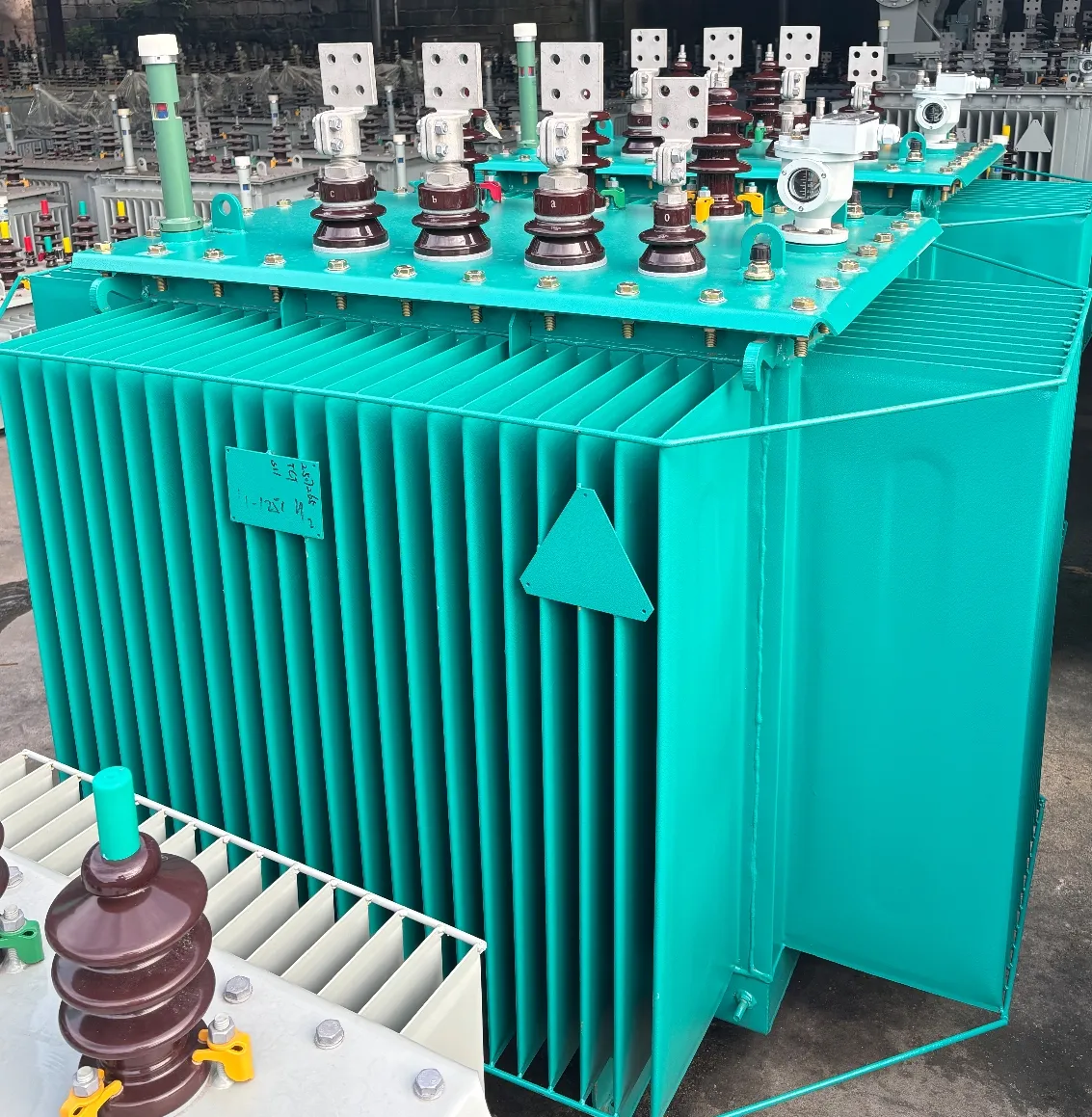
For facilities that operate 3 phase voltage regulator equipment alongside modern oil-immersed distribution transformers, the combined system delivers both voltage transformation accuracy and dynamic regulation capability. This pairing is widely recognized as best practice in industrial power engineering because it addresses both the static and dynamic dimensions of voltage management simultaneously.
Load Sensitivity and Application-Specific Deployment
Not all loads have the same sensitivity to voltage variation, and an effective power quality strategy takes this into account when selecting and deploying a 3 phase voltage regulator. Heavy motor loads, for example, can tolerate somewhat wider voltage tolerances than precision electronic equipment or medical instrumentation. Understanding the sensitivity profile of the connected equipment allows engineers to specify the correct regulation bandwidth, response speed, and capacity for each application.
In data centers and telecommunications facilities, voltage stability is critical because server hardware and networking equipment can experience data errors, unexpected shutdowns, or accelerated aging when supply voltage is inconsistent. A 3 phase voltage regulator deployed at the facility level or at the rack PDU level provides the stable input voltage that these high-value assets require. The investment in regulation at this level is typically recovered very quickly through the prevention of even a single unplanned outage.
In manufacturing environments with CNC machinery, robotics, or precision welding equipment, voltage instability translates directly into product quality variation. Dimensional errors in machined parts, weld defects, and inconsistent robot positioning are all symptoms that can originate from poor voltage regulation at the machine level. Deploying a 3 phase voltage regulator dedicated to these critical machines isolates them from supply-side variability and contributes directly to process quality and repeatability.
Long-Term Benefits and Operational Advantages
Energy Efficiency Gains Through Optimized Voltage Levels
One of the less intuitively obvious benefits of a 3 phase voltage regulator is its contribution to energy efficiency. When voltage is maintained at or near the optimal level for each connected load, energy consumption is minimized. Over-voltage conditions cause motors and other inductive loads to draw excess reactive current, increasing losses and reducing power factor. Under-voltage conditions cause the same loads to draw higher currents to maintain their output power, again increasing losses.
By keeping voltage at the optimum level continuously, a 3 phase voltage regulator reduces these excess currents and the associated I²R losses throughout the distribution system. In facilities with large motor loads, the cumulative energy savings can be substantial over the course of a year. This makes the regulator not only a power quality device but also an active energy management tool with quantifiable efficiency benefits.
Power factor improvement is another energy-related benefit. When voltage is regulated correctly, reactive power demand from inductive loads is reduced, and the overall power factor of the facility improves. This reduces the apparent power drawn from the utility, which in many tariff structures directly reduces the electricity bill through lower demand charges. The 3 phase voltage regulator therefore contributes to energy cost reduction in multiple dimensions simultaneously.
Extended Equipment Lifespan and Reduced Maintenance Burden
Every piece of electrical equipment has a designed operating voltage range, and sustained operation outside that range accelerates degradation. Insulation systems in motors and transformers are particularly vulnerable to thermal stress caused by over-current conditions resulting from voltage irregularities. By maintaining voltage within the correct operating band, a 3 phase voltage regulator keeps equipment operating within its designed thermal envelope, directly extending service life.
The maintenance benefits are equally significant. Facilities that deploy effective voltage regulation typically report fewer unexpected equipment failures, lower frequency of winding replacements in motors and transformers, and reduced call-outs for power-related electronic faults. This translates into lower maintenance labor costs, reduced spare parts inventory requirements, and more predictable maintenance scheduling — all of which contribute to operational efficiency and cost control.
From a lifecycle cost perspective, the total cost of ownership for a 3 phase voltage regulator is almost always lower than the cumulative cost of equipment damage, production losses, and maintenance interventions that result from operating without proper voltage regulation. This is the fundamental business case that drives adoption of this technology across industrial, commercial, and infrastructure sectors worldwide.
FAQ
What types of loads benefit most from a 3 phase voltage regulator?
Loads with the highest sensitivity to voltage variation benefit the most. These include three-phase induction motors, variable frequency drives, CNC machines, robotics systems, medical imaging equipment, data center servers, and precision manufacturing tools. Any application where consistent performance, product quality, or equipment reliability is critical is a strong candidate for protection by a 3 phase voltage regulator.
How does a 3 phase voltage regulator differ from a UPS system?
A 3 phase voltage regulator focuses specifically on maintaining correct output voltage under varying supply and load conditions. It does not provide backup power during a complete supply outage. A UPS system, by contrast, includes energy storage and is designed to continue supplying power during an outage, but it may or may not provide the same level of steady-state voltage regulation accuracy. In many installations, both devices are used together — the regulator handles ongoing voltage quality, while the UPS handles supply interruptions.
Can a 3 phase voltage regulator handle sudden large load changes?
Yes, this is one of the core use cases for a 3 phase voltage regulator. When large loads such as motors, compressors, or welding machines switch on or off, they cause rapid voltage changes that can affect other equipment on the same circuit. The regulator detects these deviations and corrects the output voltage quickly, minimizing the impact of load-induced voltage events on sensitive downstream equipment. The speed of correction depends on the regulator technology selected.
What is the typical installation position for a 3 phase voltage regulator in a facility?
The installation position depends on the protection strategy. A facility-level 3 phase voltage regulator installed at the main incoming supply panel protects all loads simultaneously and is suitable when the entire facility faces voltage quality issues. For protecting specific sensitive loads, a dedicated regulator installed close to the equipment it serves provides more precise and responsive protection. In large facilities, a combination of both approaches is often used to address voltage quality at multiple levels of the distribution hierarchy.
