 EN
EN

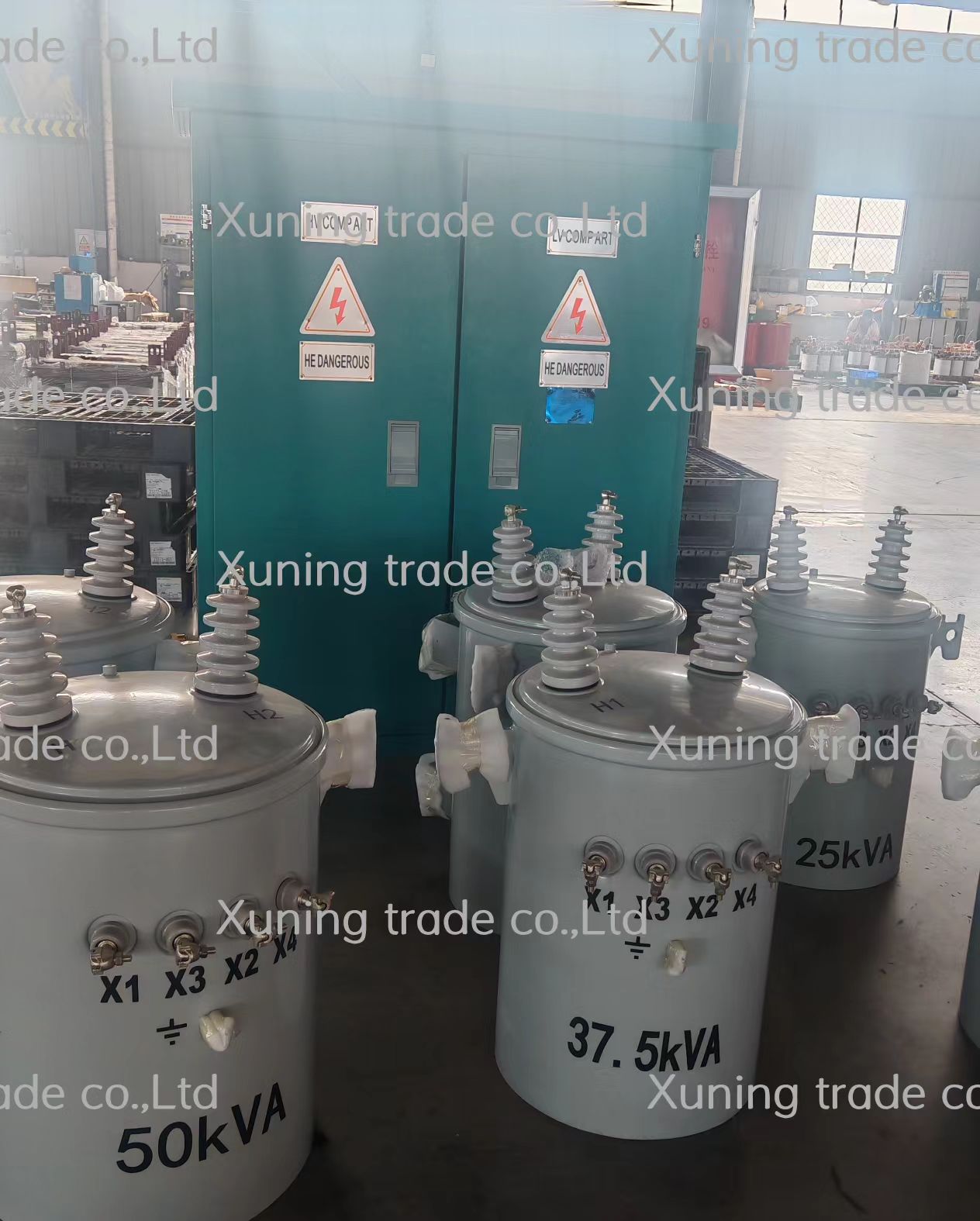
Rural electrification represents one of the most critical challenges in global infrastructure development, particularly in areas where traditional three-phase power distribution proves economically unfeasible. The single phase pole mounted transformer has emerged as the backbone of rural power delivery systems, offering a practical, cost-effective solution that bridges the gap between centralized generation facilities and dispersed rural communities. Understanding why this technology dominates rural energy infrastructure requires examining the unique constraints, economic realities, and technical advantages that make the single phase pole mounted transformer the preferred choice for millions of households and small businesses worldwide.
The fundamental reason why rural areas depend on the single phase pole mounted transformer lies in the specific power demands and geographic challenges of dispersed populations. Rural consumers typically exhibit lower energy consumption patterns compared to urban industrial zones, where three-phase systems become economically justified. A single phase pole mounted transformer delivers exactly the voltage and capacity required by rural households and small agricultural operations, eliminating unnecessary infrastructure investment while ensuring reliable service. This technical alignment between supply and demand creates the economic foundation for rural electrification programs across developing and developed nations alike.
Economic Efficiency and Installation Cost Advantages
Lower Capital and Deployment Investment
The installation cost of a single phase pole mounted transformer represents a fraction of three-phase distribution systems, making rural electrification financially viable for governments and utility operators with constrained budgets. A single phase system requires fewer conductor lines, simpler switchgear configurations, and less complex protection equipment than equivalent three-phase installations. The single phase pole mounted transformer itself weighs less than comparable three-phase units, reducing mounting hardware requirements and simplifying pole-top assembly work. These cumulative savings enable rural electrification projects to extend power access to greater distances and serve larger populations within fixed budget constraints, directly accelerating the pace of rural development.
Maintenance and Operational Efficiency
Operating costs for rural distribution networks built around the single phase pole mounted transformer remain significantly lower than three-phase alternatives throughout their service life. Technicians require less specialized training to maintain single-phase equipment, and replacement components remain more widely available and affordable across rural supply chains. The single phase pole mounted transformer operates with fewer moving parts and simpler protection coordination schemes, reducing failure rates and emergency service calls in remote areas where response times can be lengthy. This operational simplicity translates into sustained service reliability and reduced long-term costs for rural utility operators and community cooperatives managing distributed power networks.
Technical Suitability for Rural Load Patterns
Matching Supply with Rural Consumption Characteristics
Rural electricity demand fundamentally differs from urban consumption patterns, and the single phase pole mounted transformer proves ideally suited to these distinct characteristics. Individual rural households typically draw power ranging from 2 to 10 kilowatts, with agricultural pumping stations and small manufacturing operations consuming up to 50 kilowatts during peak operation. The single phase pole mounted transformer serves customer bases of 10 to 50 connections per unit, creating a naturally distributed system that prevents excessive voltage drop while minimizing conductor sizes and installation complexity. This architectural alignment ensures that rural communities receive appropriate service quality without paying for overcapacity designed for denser urban loads.
Voltage Stability and Power Quality Delivery
The single phase pole mounted transformer delivers superior voltage regulation across rural distribution feeders compared to alternatives that might oversize capacity or create distribution mismatches. Rural distribution areas often span 10 to 30 kilometers from primary substations, creating inherent voltage drop challenges that demand careful equipment selection. Single-phase design enables utility operators to place multiple single phase pole mounted transformer units along extended feeders, creating cascade voltage support that maintains acceptable service quality at distant rural locations. This distributed transformer placement prevents the voltage fluctuations that would occur if central substations attempted to serve entire rural areas through undersized conductors, ensuring that lighting systems remain bright and motor equipment operates reliably throughout the supply area.
Infrastructure Scalability and Expansion Flexibility
Incremental Network Growth Without Major Reconstruction
Rural communities experience unpredictable growth patterns, with population expansion sometimes accelerating rapidly when agricultural development or small industries emerge in previously underdeveloped areas. The modular architecture of single phase pole mounted transformer systems enables utility operators to expand service capacity through simple unit additions rather than complete feeder reconstruction. New rural consumers can often be served by installing additional single-phase units on existing pole lines, avoiding the massive capital investments and service disruptions that would accompany three-phase system upgrades. This flexibility proves invaluable in developing regions where budgets cannot support oversized infrastructure designed for hypothetical future demand, allowing communities to grow organically while maintaining financial sustainability.
Conversion Pathways to Enhanced Supply
As rural areas develop and consumption patterns intensify, the single phase pole mounted transformer infrastructure provides a foundation for eventual three-phase network deployment without requiring complete system replacement. The poles, right-of-way easements, and distribution corridors installed for single-phase service remain compatible with future three-phase upgrades, protecting initial infrastructure investments. Communities that build initial rural electrification on single-phase transformers can transition to advanced industrial supply as manufacturing operations or processing facilities emerge, creating clear economic progression from basic service to industrialized consumption. This pathway orientation ensures that single-phase initial deployment represents wise infrastructure strategy rather than temporary compromise, with long-term value preserved regardless of how rural economic development ultimately progresses.
Environmental and Physical Installation Advantages
Minimal Visual and Environmental Impact
The single phase pole mounted transformer presents a substantially smaller physical footprint than three-phase distribution equipment, preserving rural landscape characteristics and reducing community resistance to infrastructure development. Rural populations often value landscape aesthetics and environmental preservation, particularly in agricultural regions where visual harmony supports tourism and quality-of-life perceptions. Single-phase equipment occupies minimal pole-top space, maintains lower noise levels during operation, and presents reduced electromagnetic field exposure compared to higher-capacity alternatives. This unobtrusive technical presence enables the single phase pole mounted transformer to integrate smoothly into rural environments, supporting community acceptance and reducing political obstacles to electrification projects that must navigate local stakeholder concerns.
Simplified Installation in Challenging Terrain
Rural geography frequently presents installation challenges including steep terrain, dense vegetation, and limited access that would complicate deployment of heavier three-phase equipment. The single phase pole mounted transformer weighs typically 500 to 2000 kilograms compared to three-phase units exceeding 5000 kilograms, enabling installation in remote locations using helicopter placement, manual pole-raising crews, or minimal mechanical equipment. This physical maneuverability proves essential in mountainous regions, island communities, and densely forested areas where standard construction vehicles cannot operate efficiently. The reduced installation complexity and lower safety risks associated with handling lighter single phase pole mounted transformer units make rural electrification projects safer and faster to execute, reducing completion timelines and enabling rural communities to access electricity within seasons rather than years.
FAQ
What power capacity does a typical single phase pole mounted transformer deliver to rural customers?
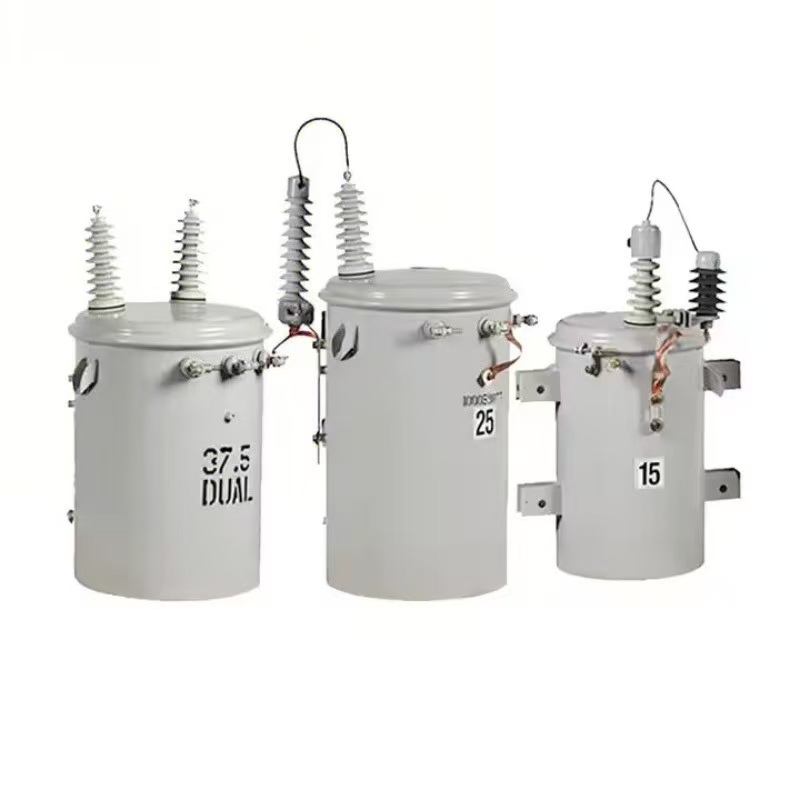
Standard single phase pole mounted transformer units typically range from 5 kilovolt-amperes to 50 kilovolt-amperes capacity, with most rural installations utilizing 10 to 25 kilowatt-ampere configurations. This sizing serves customer bases of 10 to 40 individual household connections, with agricultural operations and small commercial enterprises drawing supplementary capacity during peak demand periods. The single phase pole mounted transformer design accommodates seasonal variation through overload capacity that permits temporary exceeded ratings during harvest periods or agricultural processing seasons when rural power demand peaks sharply.
Can a single phase pole mounted transformer handle industrial applications in rural areas?
Limited industrial applications suit the single phase pole mounted transformer, particularly small-scale agricultural processing, textile workshops, and craft manufacturing that require 10 to 50 kilowatt steady-state loads. However, larger manufacturing facilities requiring 100 kilowatt or greater capacity with three-phase motor equipment exceed the single phase pole mounted transformer capability and necessitate upgraded three-phase distribution systems. As rural communities develop economically and industrial operations expand, initial single-phase infrastructure typically remains in place for residential service while separate three-phase feeder lines serve growing industrial zones.
What maintenance requirements apply to single phase pole mounted transformers deployed in rural locations?
Routine maintenance for the single phase pole mounted transformer includes annual visual inspections, oil-level verification for oil-immersed designs, cooling equipment cleaning, and terminal connection tightening to prevent corrosion-related faults. The single phase pole mounted transformer typically operates reliably for 25 to 35 years with minimal intervention, with preventive maintenance primarily addressing environmental contamination and connection degradation rather than component failures. Rural utility operators often coordinate maintenance with agricultural cycles, performing single phase pole mounted transformer inspections during low-demand seasons when brief service interruptions create minimal customer impact.
