 EN
EN

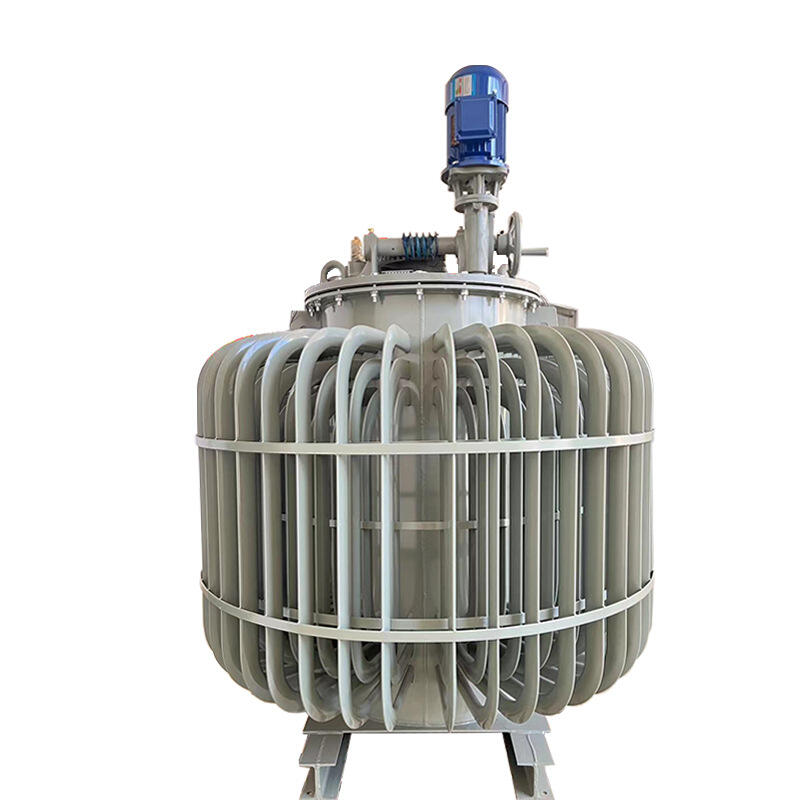
Modern electrical power systems face unprecedented challenges in maintaining stable voltage levels across complex distribution networks. As industrial loads become more sophisticated and renewable energy integration increases, the demand for precise voltage control has never been greater. A 3 phase voltage regulator serves as a critical component in ensuring optimal power quality and system reliability throughout the electrical infrastructure. These advanced devices provide automatic voltage regulation, protecting sensitive equipment while optimizing energy efficiency across three-phase power systems.
The fundamental role of voltage regulation in three-phase systems extends beyond simple voltage adjustment. These sophisticated devices monitor continuous power flow variations and respond instantly to maintain predetermined voltage levels. Industrial facilities, commercial complexes, and utility distribution systems rely heavily on consistent voltage delivery to prevent equipment damage, reduce energy waste, and ensure operational continuity. Without proper voltage regulation, electrical systems experience significant inefficiencies, equipment failures, and costly downtime.
Understanding Three-Phase Voltage Regulation Technology
Core Principles of Voltage Regulation
Three-phase voltage regulation operates on the principle of automatic tap changing and reactive power compensation. A 3 phase voltage regulator continuously monitors voltage levels across all three phases, detecting variations that could impact system performance. When voltage deviations occur, the regulator automatically adjusts internal transformer taps or switches capacitor banks to restore optimal voltage levels. This process happens within milliseconds, ensuring seamless power delivery without interrupting connected loads.
The regulation process involves sophisticated control algorithms that analyze voltage magnitude, phase relationships, and load characteristics. Modern regulators incorporate microprocessor-based controllers that can predict voltage trends and make preemptive adjustments. These intelligent systems consider factors such as load patterns, ambient temperature, and system impedance to optimize regulation performance. The result is precise voltage control that adapts to changing system conditions while maintaining excellent stability.
Advanced Control Mechanisms
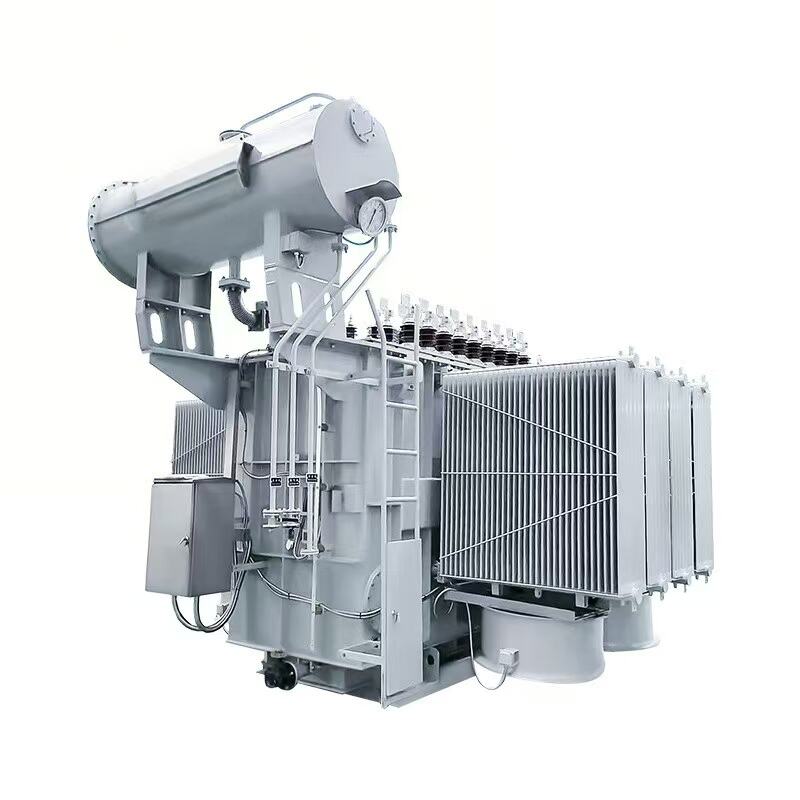
Contemporary three-phase voltage regulators employ multiple control strategies to achieve superior performance. Proportional-integral-derivative control algorithms provide rapid response to voltage disturbances while minimizing overshoot and oscillations. Some advanced units incorporate adaptive control features that learn from system behavior and automatically optimize their response characteristics. These sophisticated control mechanisms enable the 3 phase voltage regulator to handle complex load scenarios and maintain stability under varying operating conditions.
Digital signal processing technology enhances the precision of voltage measurement and control actions. High-resolution analog-to-digital converters capture voltage waveforms with exceptional accuracy, enabling the detection of subtle variations that could indicate developing problems. Advanced filtering algorithms eliminate noise and harmonics from measurement signals, ensuring that control decisions are based on clean, reliable data. This technological sophistication translates directly into improved regulation accuracy and system reliability.
Grid Stability Enhancement Mechanisms
Voltage Fluctuation Mitigation
One of the primary benefits of implementing a 3 phase voltage regulator in power systems is its ability to mitigate voltage fluctuations caused by varying loads and generation sources. Industrial facilities often experience significant load changes throughout their operating cycles, creating voltage variations that can propagate throughout the distribution system. The regulator actively counters these fluctuations by providing rapid voltage correction, preventing disturbances from affecting other connected customers or sensitive equipment.
Renewable energy sources, particularly solar and wind installations, introduce additional voltage stability challenges due to their intermittent nature. Weather-dependent generation can cause rapid voltage changes that traditional utility equipment cannot adequately address. Modern voltage regulators incorporate fast-acting electronic switches and advanced algorithms specifically designed to handle these renewable energy integration challenges. The regulator smooths out voltage variations, enabling higher penetration of renewable sources without compromising grid stability.
Power Quality Improvement
Beyond basic voltage regulation, these devices significantly enhance overall power quality throughout the electrical system. A properly configured 3 phase voltage regulator reduces harmonic distortion, improves power factor, and minimizes voltage unbalance between phases. These improvements directly translate into reduced equipment stress, lower energy consumption, and extended equipment lifespan across all connected loads.
The power quality enhancement capabilities extend to protection against voltage sags, swells, and transient disturbances. Sensitive electronic equipment, process controllers, and variable frequency drives are particularly vulnerable to these power quality issues. The regulator provides a buffer against such disturbances, maintaining stable operating conditions even during utility system events or nearby fault conditions. This protection capability is essential for maintaining continuous operation in critical industrial processes.
Applications Across Industrial and Commercial Sectors
Manufacturing and Industrial Processes
Manufacturing facilities represent one of the most demanding applications for three-phase voltage regulation technology. Precision machinery, automated production lines, and process control systems require extremely stable voltage conditions to maintain product quality and operational efficiency. A 3 phase voltage regulator ensures that voltage variations do not affect manufacturing tolerances or cause unexpected equipment shutdowns. The economic impact of improved voltage stability in manufacturing environments typically justifies the investment through reduced scrap rates, improved productivity, and decreased maintenance costs.
Heavy industrial processes such as steel production, chemical processing, and mining operations benefit significantly from advanced voltage regulation. These facilities often operate large motor drives, arc furnaces, and other equipment that can create significant voltage disturbances. The regulator not only protects the facility's own equipment but also prevents these disturbances from affecting the broader electrical system. This dual benefit makes voltage regulation essential for industrial facilities that want to be good neighbors while protecting their own operations.
Commercial and Infrastructure Applications
Commercial buildings, data centers, and critical infrastructure facilities increasingly rely on sophisticated voltage regulation to ensure reliable operation. Data centers, in particular, require extremely stable power conditions to protect servers, storage systems, and networking equipment worth millions of dollars. The 3 phase voltage regulator provides the precise voltage control necessary to maintain optimal operating conditions for these sensitive electronic systems.
Healthcare facilities, educational institutions, and government buildings also benefit from improved voltage stability. These facilities often house critical equipment that cannot tolerate voltage variations, including medical devices, research equipment, and emergency systems. Reliable voltage regulation ensures that these critical functions continue operating normally even during utility system disturbances or peak demand periods. The enhanced reliability provided by voltage regulation directly contributes to public safety and operational continuity.
Economic Benefits and Return on Investment
Energy Efficiency Improvements
Installing a 3 phase voltage regulator typically results in measurable energy efficiency improvements throughout the electrical system. Motors, transformers, and other electrical equipment operate most efficiently when supplied with optimal voltage levels. Voltage variations, even relatively small ones, can significantly increase energy consumption and reduce equipment efficiency. The regulator maintains ideal voltage conditions, enabling all connected equipment to operate at peak efficiency levels.
The energy savings achieved through proper voltage regulation compound over time, often resulting in substantial cost reductions. Studies have shown that voltage optimization can reduce energy consumption by three to eight percent in typical commercial and industrial applications. For large facilities with significant electrical loads, these savings can translate into tens of thousands of dollars annually. The environmental benefits of reduced energy consumption further enhance the value proposition of voltage regulation technology.
Equipment Protection and Maintenance Reduction
Stable voltage conditions significantly extend the lifespan of electrical equipment and reduce maintenance requirements. Voltage variations cause additional stress on motor windings, transformer insulation, and electronic components, leading to premature failures and increased maintenance costs. A 3 phase voltage regulator eliminates these voltage-related stresses, allowing equipment to operate within design parameters and achieve expected service life.
The reduction in equipment failures and maintenance requirements provides both direct cost savings and indirect benefits through improved operational reliability. Unplanned maintenance events and equipment failures can disrupt production schedules, require expensive emergency repairs, and impact customer satisfaction. By preventing voltage-related equipment problems, the regulator helps maintain smooth operations and avoid costly interruptions. These reliability improvements often represent the most significant economic benefit of voltage regulation technology.
Installation and Integration Considerations
System Design and Sizing
Proper selection and sizing of a 3 phase voltage regulator requires careful analysis of the electrical system characteristics and load requirements. Engineers must consider factors such as maximum load current, voltage regulation range, response speed requirements, and environmental conditions. The regulator capacity must accommodate not only current loads but also anticipated future growth and peak demand scenarios. Undersized regulators cannot provide adequate voltage control, while oversized units represent unnecessary capital expenditure.
System integration involves coordinating the voltage regulator with existing protective devices, monitoring systems, and utility interconnection requirements. Modern regulators often include communication capabilities that enable integration with building automation systems or utility demand response programs. These communication features provide valuable operational data and enable remote monitoring and control capabilities. Proper integration ensures that the regulator operates harmoniously with other system components and maximizes overall system performance.
Maintenance and Operational Considerations
While modern three-phase voltage regulators are designed for minimal maintenance requirements, regular inspection and testing ensure continued reliable operation. Preventive maintenance programs typically include periodic testing of control systems, verification of regulation accuracy, and inspection of mechanical components. Many advanced regulators include self-diagnostic capabilities that alert operators to potential problems before they affect system performance.
Operational considerations include establishing appropriate voltage setpoints, configuring alarm thresholds, and training personnel on system operation. The flexibility of modern regulators allows fine-tuning of performance parameters to optimize operation for specific applications. Regular performance monitoring helps identify opportunities for further optimization and ensures that the 3 phase voltage regulator continues delivering maximum benefits throughout its service life.
Future Developments and Smart Grid Integration
Advanced Control Technologies
The evolution of voltage regulation technology continues with the development of more sophisticated control algorithms and integration capabilities. Artificial intelligence and machine learning technologies are being incorporated into advanced regulators, enabling predictive control strategies that anticipate system needs before problems develop. These intelligent systems can optimize their operation based on historical patterns, weather forecasts, and real-time grid conditions.
Enhanced communication capabilities enable voltage regulators to participate actively in smart grid operations and demand response programs. Future regulators will coordinate with other grid devices to optimize overall system performance and support renewable energy integration. The ability to communicate with utility control centers, distributed energy resources, and other smart grid components transforms the 3 phase voltage regulator from a standalone device into an integral part of an intelligent electrical system.
Integration with Renewable Energy Systems
As renewable energy sources become increasingly prevalent, voltage regulation technology must evolve to address the unique challenges these systems present. Future voltage regulators will incorporate advanced algorithms specifically designed to handle the rapid voltage variations associated with solar and wind generation. Energy storage integration capabilities will enable regulators to provide both voltage regulation and energy management functions within a single system.
The development of microgrids and distributed generation systems creates new opportunities for advanced voltage regulation. These systems require sophisticated control capabilities to maintain stability while operating in both grid-connected and islanded modes. Next-generation regulators will provide the flexibility and intelligence necessary to support these emerging power system architectures while maintaining the high levels of reliability and efficiency that modern facilities require.
FAQ
What is the typical response time of a 3 phase voltage regulator
Modern three-phase voltage regulators typically respond to voltage changes within 1-3 seconds for mechanical tap changers and within milliseconds for electronic regulators. The response time depends on the regulation method used, with electronic regulators providing the fastest response for applications requiring immediate voltage correction. Fast response times are crucial for protecting sensitive equipment and maintaining stable operating conditions during system disturbances.
How does a voltage regulator differ from a standard transformer
While both devices can change voltage levels, a 3 phase voltage regulator actively monitors and adjusts output voltage automatically in response to changing conditions. Standard transformers provide a fixed voltage ratio and cannot compensate for input voltage variations. Voltage regulators include sophisticated control systems that continuously adjust their operation to maintain constant output voltage regardless of input variations or load changes.
What maintenance is required for three-phase voltage regulators
Regular maintenance typically includes annual inspection of mechanical components, testing of control systems, and verification of regulation accuracy. Electronic regulators require minimal maintenance beyond periodic cleaning and connection inspection. Mechanical tap-changing regulators may need more frequent attention to moving parts and oil systems. Most modern units include self-diagnostic features that alert operators to maintenance needs before problems affect performance.
Can voltage regulators improve power factor in electrical systems
While the primary function of a 3 phase voltage regulator is voltage control, proper voltage regulation can indirectly improve power factor by enabling motors and other inductive loads to operate more efficiently. Some advanced regulators include integrated power factor correction capabilities through reactive power compensation. However, dedicated power factor correction equipment may still be necessary for facilities with significant reactive power requirements or specific power factor targets.
